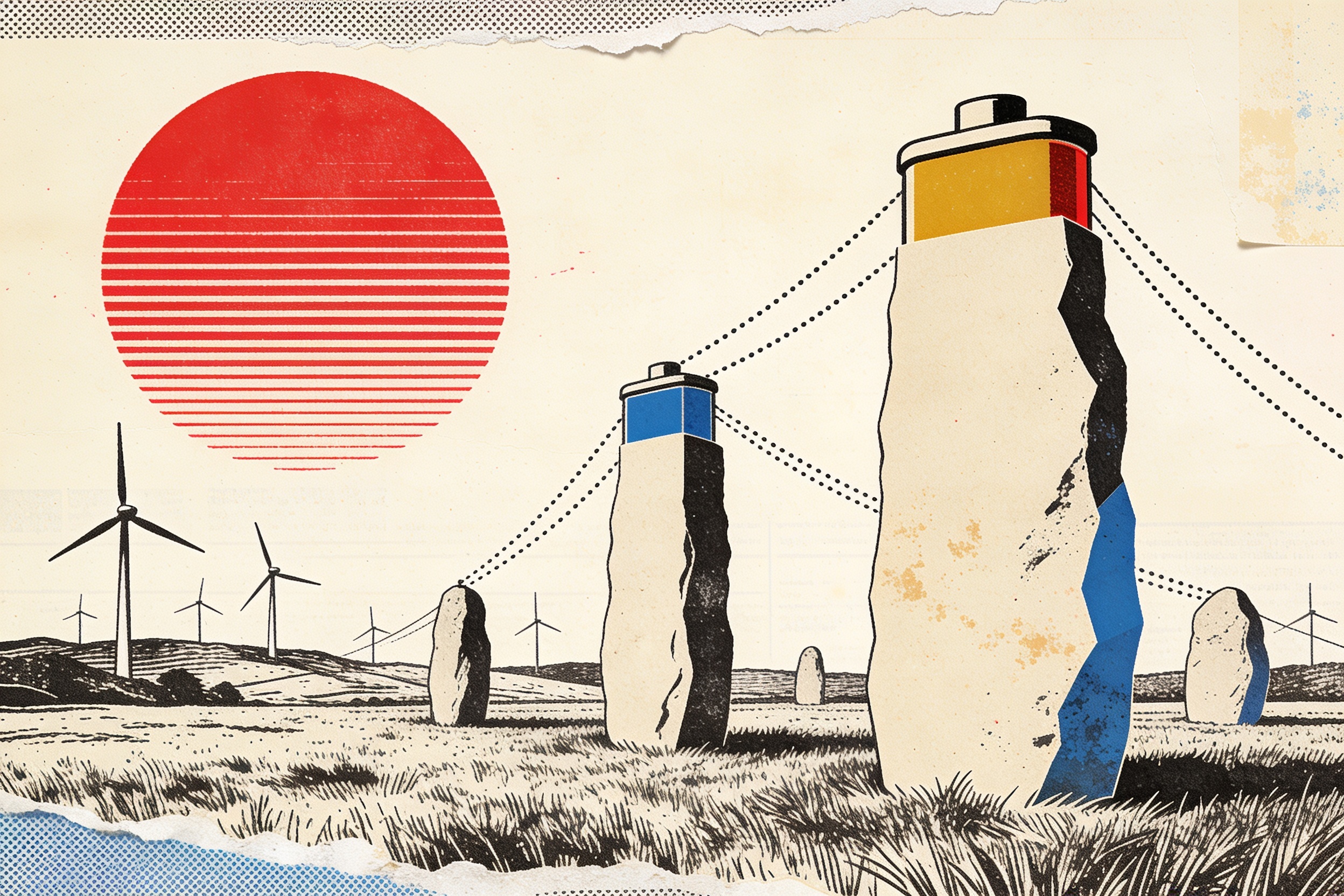
The most consequential energy chart of the decade is almost comically boring: grid-scale battery capacity, plotted quarterly. It is a straight line on a logarithmic axis. Utilities planned around storage being scarce through 2030. It stopped being scarce last year.
California’s evening peak — the infamous duck curve that was supposed to break solar economics — is now routinely served by batteries charged at noon. Texas, with no climate mandate whatsoever, is installing storage faster than any grid on earth, for the least sentimental reason available: arbitrage pays.
The sodium surprise
The lithium-ion cost decline was projected. What wasn’t projected was sodium-ion arriving at commercial scale years early, unlocked by manufacturers hedging against lithium price spikes. Sodium cells are heavier and store less — irrelevant for a building that never moves — and they are made from feedstocks nobody fights wars over.
The energy transition stopped being a technology problem some time ago. It is now a permitting problem with a technology attached.
Interconnection queues tell the real story: over two terawatts of proposed storage and generation wait, on average, four years for a grid connection in the United States. The batteries are ready. The paperwork is not.
What changes next
Cheap storage doesn’t just firm up renewables — it dissolves assumptions across the grid. Peaker plants lose their business model. Transmission upgrades get deferred by a container of cells at the substation. And the political economy shifts in ways not yet priced in: a grid that stores its own power is a grid where blackouts become choices, and voters know whose.
The boom’s next chapter is written in county permitting offices and FERC dockets — which is exactly how you know it has become real infrastructure.